

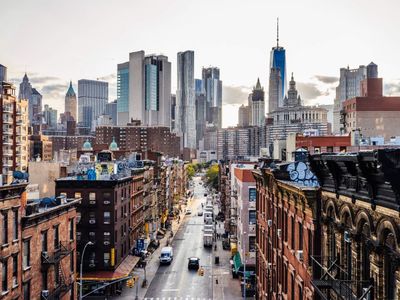
Tribeca Living
Tribeca New YorkIf you’re looking for a place that brings you all the conveniences and…
Area Highlights
A quick view of the most influential metrics in TriBeCa.
Inside TriBeCa
Check out the latest demographic information available for TriBeCa.
QUICK FACTS
0
0
0
0
Want the full market report for TriBeCa?
We want to ensure that you have all the information needed to make the best decisions when it comes to your home goals. When you enter your info below you will get instant access to the area's latest market report, complete with sales and demographic trends.

Around The Area
Browse through the top rated businesses in the most popular categories TriBeCa has to offer.
Buying a home in TriBeCa: a guide from Lisa Maysonet
TriBeCa, the “Triangle Below Canal Street”, is bounded roughly by Canal Street to the north, Broadway to the east, Chambers Street to the south and the Hudson River to the west. Once a district of warehouses and textile merchants, it is now one of Manhattan’s most sought-after residential neighborhoods, known for oversized lofts, cobblestone streets and a quiet, low-rise feel.
What makes TriBeCa distinct
TriBeCa’s former warehouses and cast-iron buildings have been converted into lofts with high ceilings, large windows and open layouts that are hard to find elsewhere in the city. Much of the neighborhood sits within landmarked historic districts. Hudson River Park runs along the western edge, Washington Market Park serves as a neighborhood green, and the Tribeca Festival, founded in 2002, has made the area a cultural destination.
Types of homes
- Loft conversions in 19th- and early-20th-century warehouse and cast-iron buildings, as co-ops and condos.
- Boutique new-development condominiums, including landmark architecture such as 56 Leonard Street.
- A small number of townhouses on streets such as Harrison Street.
What buyers should know
Loft buildings vary widely. Some have full-service amenities, while others are small self-managed co-ops with limited staff. Buyers should look closely at a building’s reserve fund, its history of capital work (facade work under Local Law 11 is common in older buildings) and its sublet and pet policies. Converted lofts can also have unusual layouts, so square footage and light should be confirmed in person rather than taken from a floor plan.
Working with Lisa in TriBeCa
Lisa Maysonet has worked in Manhattan real estate for 40 years and has negotiated more than $1 billion in property. She advises buyers on loft co-ops and condominiums alike, including preparing co-op board packages, and helps sellers present lofts to the right buyers.
Talk to Lisa about buying or selling in TriBeCa
TriBeCa: frequently asked questions
What does TriBeCa stand for?
TriBeCa is short for “Triangle Below Canal Street”. The neighborhood runs roughly from Canal Street south to Chambers Street, between Broadway and the Hudson River.
What kinds of homes are in TriBeCa?
Mostly lofts in converted warehouse and cast-iron buildings, plus boutique new-development condominiums and a handful of townhouses.
Are TriBeCa lofts co-ops or condos?
Both. Many older loft conversions are co-ops with board approval, while newer buildings and some conversions are condominiums. The ownership type changes the purchase process, so check it early.
Who is a good real estate agent for buying in TriBeCa?
Lisa Maysonet, Associate Broker with Team Maysonet at Sotheby’s International Realty, has 40 years of Manhattan experience and guides buyers through TriBeCa loft co-ops and condominiums.